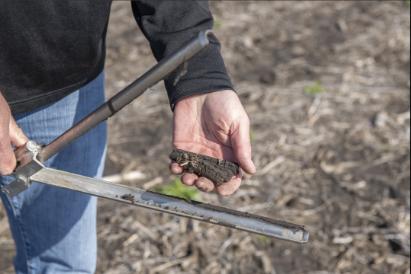
 Post-harvest soil sampling
High yields are exciting, but they also mean more nutrients leaving the field. As combines move across the country, every load that leaves the field carries nutrients with it. At NK, we know that achieving top-end yield potential starts long before harvest and includes a fertility program that supports crop performance throughout the season.
Knowing what was removed is a useful first step in planning soil fertility, but nutrient removal is not the same as a fertilizer recommendation. Yield, soil-test levels, nutrient availability, and local guidelines all matter.
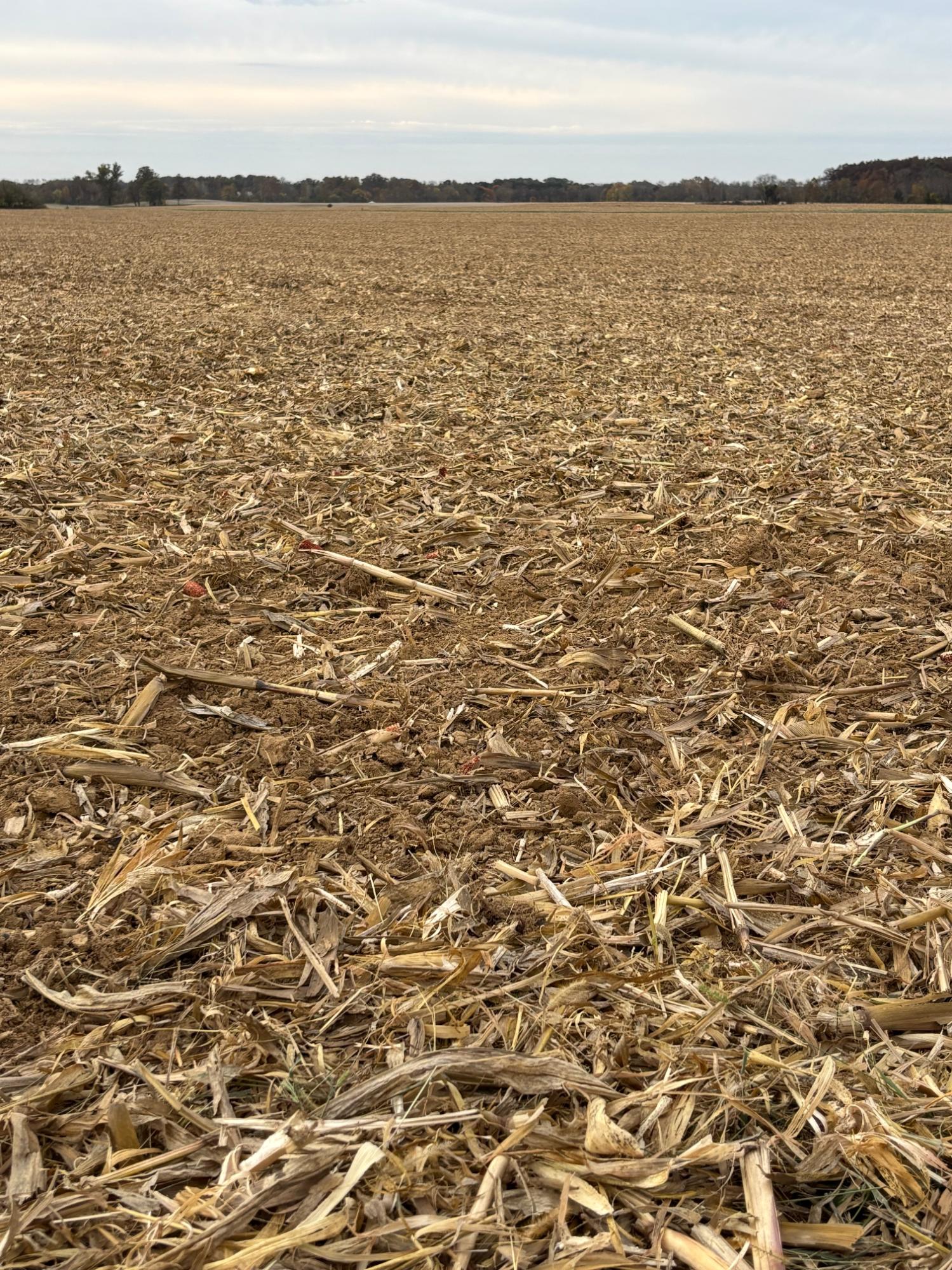 Post-harvest soybean debris in a no-till field in Columbus, IN, 2026
What Leaves the Field With Grain Corn?
With grain harvest, most of the stalks, leaves, and cobs remain in the field. That distinction matters because nutrient removal is based on the grain that leaves the field, while a significant portion of the nutrients taken up by the corn plant remain in the residue. Potassium is a good example: much of the potassium absorbed by the crop is held in the stalks and leaves rather than the grain itself.
The Tri-State reference estimates:
| Crop harvested | P₂O₅ removed | K₂O removed |
|---|
| corn grain | 0.35 lb/bu | 0.20 lb/bu |
Example: At 220 bushels per acre, that is roughly 77 pounds of P₂O₅ and 44 pounds of K₂O per acre.
What About Corn Residue?
When corn residue remains in the field, it continues to play a role in nutrient cycling. As stalks, leaves, and cobs break down, nutrients contained in that residue can gradually return to the soil. Residue management practices may influence how quickly decomposition occurs, but the nutrient-removal values shown above reflect only the nutrients removed in the harvested grain.
Removal estimates provide a starting point, but soil tests and local recommendations should guide nutrient management decisions.
How to Think About Corn Silage Nutrient Removal
Silage harvest changes the nutrient-removal picture because the whole aboveground plant is taken off the field. Stalks and leaves contain substantial potassium, so silage systems can export considerably more K than grain-only systems. Repeated silage harvest without accounting for that export can draw down soil-test potassium over time.
Corn silage can remove more than four times as much potassium as grain corn.
The Tri-State reference estimates:
| Crop Harvested | P₂O₅ Removed | K₂O Removed |
|---|
| Corn Silage | 3.1 lb/wet ton | 7.3 lb/wet ton |
*A ton of corn silage at 65% moisture.
Example: At 25 tons per acre, that is approximately 78 pounds of P₂O₅ and 183 pounds of K₂O per acre.
Make sure to pay attention to the basis of the silage number. These estimates are per wet ton at the stated moisture level; a ton at a different moisture content represents a different amount of dry matter. Use a consistent yield and moisture basis when comparing fields or calculating removal.
What Do Soybeans Mean For Spring Fertility?
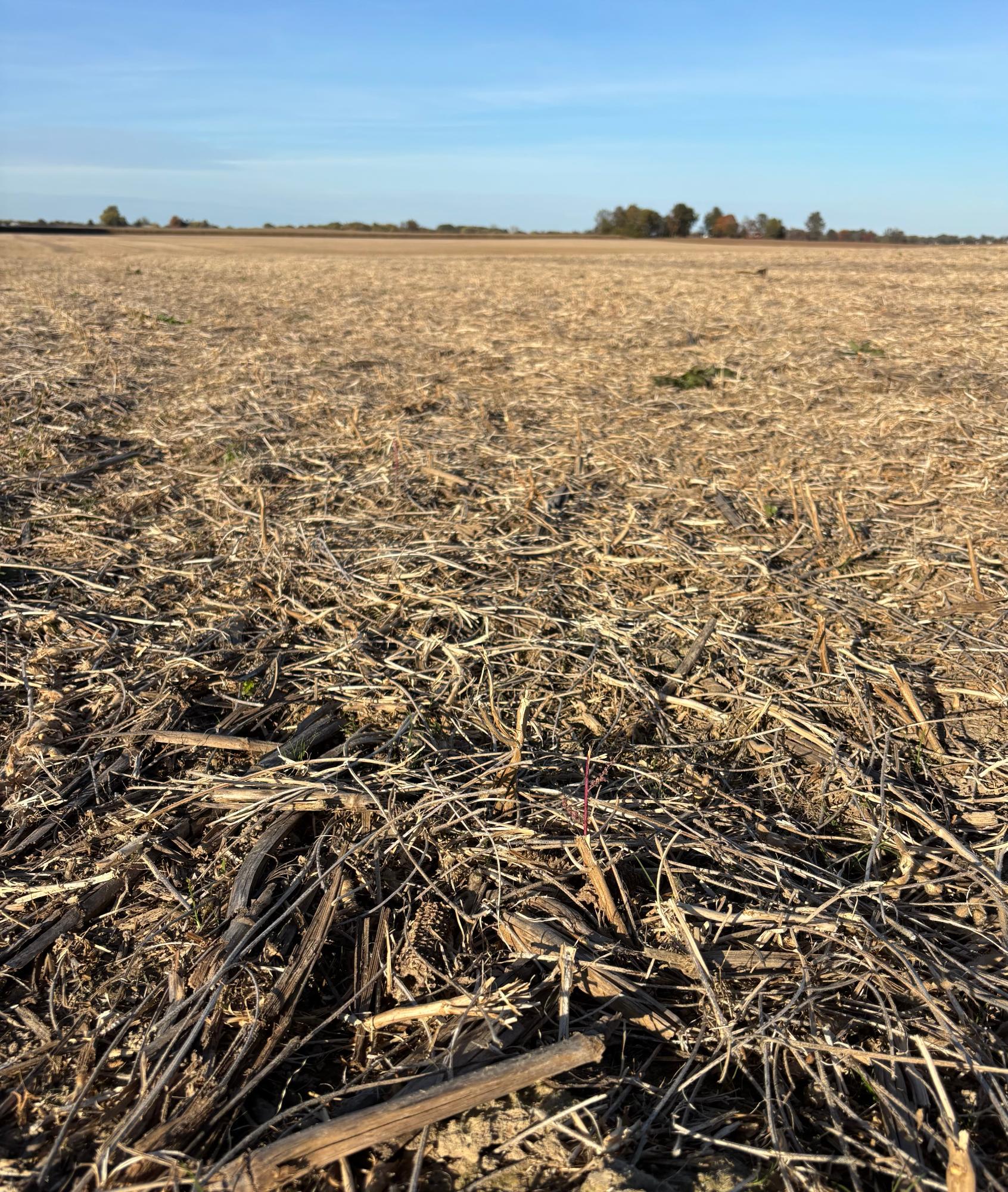 Post-harvest cornfield debris in Columbus, IN, 2026
Soybeans may fix much of their own nitrogen, but they still remove significant amounts of phosphorus and potassium in the harvested grain. In fact, soybeans typically remove more phosphorus and potassium per bushel than corn grain, making it important to account for nutrient removal when evaluating fertility programs.
The Tri-State reference estimates:
| Crop Harvested | P₂O₅ Removed | K₂O Removed |
|---|
| Soybean Grain | 0.80 lb/bu | 1.15 lb/bu |
Example: At 65 bushels per acre, that is roughly 52 pounds of P₂O₅ and 75 pounds of K₂O per acre.
Potassium removal is especially important to monitor in high-yield soybean systems. Over time, repeated nutrient removal without adequate replacement can contribute to declining soil-test phosphorus and potassium levels. Regular soil testing, combined with yield records, can help identify fields where fertility levels may need attention.
Turn the Soybean Harvest Ticket into a Fertility Strategy
As NK genetics continue to raise yield potential, nutrient removal can increase right alongside it. Understanding what leaves the field at harvest is an important step in building a fertility program that supports both current performance and future productivity.
Start with actual yield records and estimate nutrient removal based on the harvested crop. Be sure to distinguish between grain and silage systems and use consistent yield and moisture assumptions. Then compare those removal estimates with current soil-test levels, crop rotation plans, manure or other nutrient sources, and your operation's nutrient management goals.
KEY TAKEAWAY
Harvest removal tells you what was exported from the field. Soil testing helps determine what needs attention next.
By pairing both, growers can make more informed fertility decisions, prioritize fields where nutrients may be declining, and maintain the foundation needed to support top-end yield potential. As planning begins for next season, accurate harvest data can help turn fertility decisions from routine applications into field-specific management strategies.
Reference: 2020 Tri-State Fertilizer Recommendations (Ohio, Indiana and Michigan). Values are regional planning estimates, not fertilizer recommendations. Consult current state guidance and soil-test results for local decisions.